

Sun, Skin & Supplements: The Inside-Out Guide to UV Safety This Summer
Discover how antioxidants, Vitamin C, Vitamin E, lutein and zeaxanthin support healthy skin and eyes while complementing sunscreen and other sun-safe habits.
Every July, health organizations mark UV Safety Awareness Month — a timely reminder that ultraviolet exposure is a year-round concern, not just a summer afterthought. Yet summer remains the season when UV intensity peaks, days outdoors stretch longer, and cumulative sun exposure quietly adds up.
Most people think of UV safety as a matter of sunscreen and shade. That's true, but it's only half the picture. Emerging research continues to highlight the role that internal nutrition — specific antioxidants, vitamins, and carotenoids — plays in how well the body withstands and recovers from UV-related stress. Understanding which vitamins for sun protection are worth prioritizing, and how they work alongside topical care, is central to a well-rounded approach to summer skin health. This guide takes a closer, science-led look at UV safety from the inside out, covering how UV rays affect the body, which nutrients matter most, and how to build sun-smart habits that protect you at a cellular level.
1. How UV Rays Affect Skin, Eyes & Cellular Health
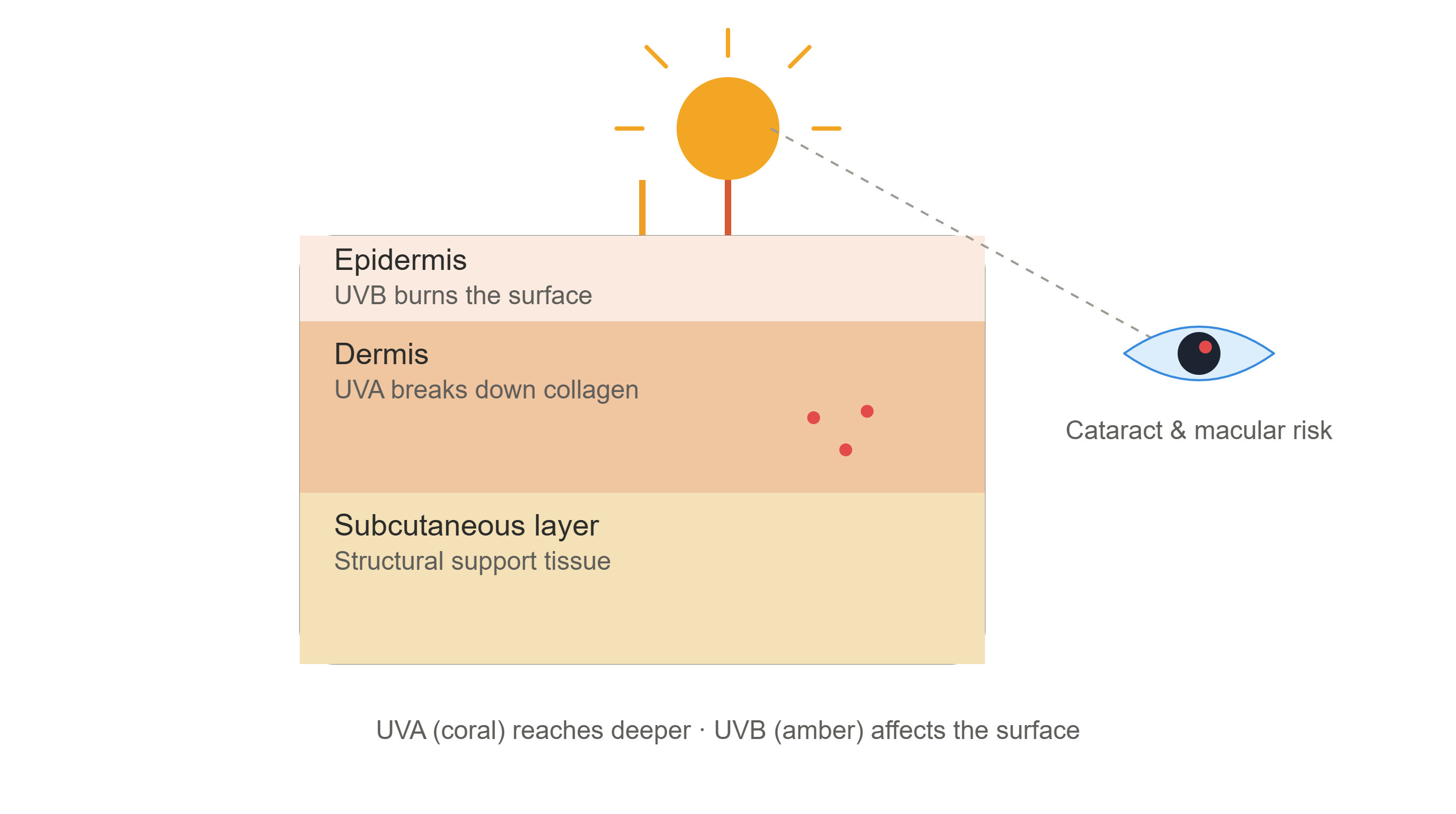
Ultraviolet (UV) radiation reaches the body mainly through UVA and UVB rays. UVA penetrates deep into the skin, accelerating the breakdown of collagen and elastin, while UVB primarily affects the outer layers, causing sunburn and damaging skin-cell DNA.
Both types of UV exposure generate reactive oxygen species (ROS), leading to oxidative stress—a process that damages cells, proteins, and DNA. Over time, this contributes to premature aging, hyperpigmentation, and an increased risk of skin cancer.
UV rays also affect the eyes. Long-term exposure is linked to conditions such as cataracts and macular degeneration, as UV and high-energy visible (HEV) light can damage the lens and retina through oxidative stress.
Understanding UV damage isn't just about preventing sunburn—it's about reducing cumulative oxidative stress that impacts both skin and eye health over time.
2. The Role of Antioxidants: Vitamin C, E, Lutein & Zeaxanthin
Since UV damage is largely driven by oxidative stress, antioxidants play an important role in supporting the body's natural defenses.
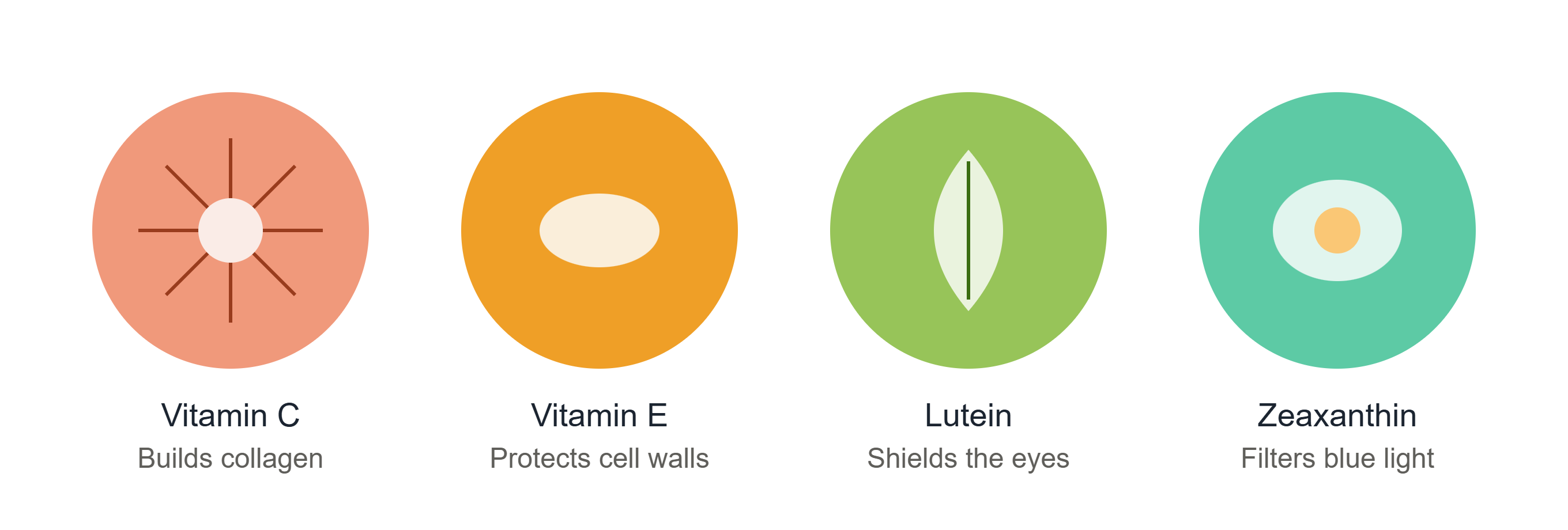
- Vitamin C helps neutralize free radicals while supporting collagen production for healthier, more resilient skin.
- Vitamin E protects cell membranes from oxidative damage and works synergistically with Vitamin C to enhance antioxidant activity.
- Lutein and Zeaxanthin are carotenoids that accumulate in the retina, where they help filter high-energy light and reduce oxidative stress. They are also found in the skin and may improve its resilience against UV-related damage.
Together, these four nutrients provide well-researched support for maintaining healthy skin and eyes during UV exposure.
3. Foods & Nutrients That Support Skin Resilience
A nutrient-dense diet remains one of the most accessible ways to support the body's UV defenses. Consider incorporating the following into a summer-forward diet:
- Citrus fruits, bell peppers, and strawberries — excellent natural sources of Vitamin C.
- Almonds, sunflower seeds, and avocado — rich in Vitamin E.
- Leafy greens like kale, spinach, and collard greens — among the most concentrated dietary sources of lutein and zeaxanthin.
- Egg yolks — contain a bioavailable form of lutein and zeaxanthin that the body readily absorbs.
- Fatty fish (salmon, mackerel, sardines) — provide omega-3 fatty acids, which support the skin's lipid barrier and help maintain hydration and elasticity.
- Tomatoes — a source of lycopene, another carotenoid antioxidant studied for its potential role in skin's UV response.
- Green tea — rich in polyphenols, plant-based antioxidants that offer additional support against oxidative stress.
A varied, colorful diet — spanning fruits, vegetables, healthy fats, and lean proteins — provides a broad spectrum of antioxidants and micronutrients that work synergistically, rather than relying on any single "superfood."
4. Sun-Smart Daily Habits: The 7-Pillar Approach
Nutrition supports the body's internal defenses, but it works best in tandem with consistent external sun-safety habits. Consider building your summer routine around these seven pillars:
- Broad-spectrum sunscreen (SPF 30+): Apply generously and reapply every two hours, or immediately after swimming or sweating.
- Seek shade during peak hours: UV intensity is highest between 10 a.m. and 4 p.m.
- Wear UV-protective eyewear: Sunglasses that block 100% of UVA and UVB rays help protect the eyes from cumulative UV exposure.
- Choose protective clothing: Tightly woven fabrics, long sleeves, and wide-brimmed hats add a physical barrier beyond sunscreen.
- Stay hydrated: Proper hydration supports skin barrier function and overall cellular health.
- Prioritize a nutrient-rich diet: As outlined above, antioxidant-rich foods support the body's internal UV response.
- Monitor skin changes regularly: Routine self-checks and periodic dermatologist visits support early detection of sun-related skin changes.
No single pillar offers complete protection on its own. It's the combination — consistently applied — that builds meaningful resilience against cumulative UV exposure over an entire season.
5. When to Consider Supplementation & What to Look For
A balanced diet is the best source of antioxidants, but some people—such as those with restrictive diets, limited access to fresh produce, or high sun exposure—may consider supplements to help support skin and eye health.
When choosing a supplement, look for:
- Third-party testing: Independent verification of purity, potency, and label accuracy.
- Clinically studied dosages: Formulas that reflect amounts used in published research, rather than arbitrary or proprietary blends.
- Transparent sourcing: Clear information about where ingredients are derived and how they're processed.
- Minimal unnecessary additives: Fewer fillers, artificial colors, and unnecessary binders.
- Third-party certifications: Look for markers such as NSF, USP, or Informed Choice where applicable.
Keep in mind that supplements support but do not replace sunscreen, protective clothing, or other sun-safe habits. They work best as part of a comprehensive UV protection strategy.
Always consult a healthcare provider before starting any new supplement, especially if you have medical conditions, take medications, or are pregnant or nursing.
Frequently Asked Questions
Can supplements replace sunscreen?
No. Supplements support internal antioxidant defenses but cannot replace sunscreen or protective clothing.
Does Vitamin C protect against UV rays?
Vitamin C helps combat oxidative stress but does not block UV radiation.
Which vitamins are best for sun protection?
Vitamin C, Vitamin E, lutein, and zeaxanthin are among the most studied nutrients.
Can lutein help eye health?
Yes. Lutein and zeaxanthin help support the retina by filtering high-energy visible light and reducing oxidative stress.
What foods support skin after sun exposure?
Fruits, vegetables, healthy fats, and antioxidant-rich foods support recovery and skin health.
Do all skin tones need sun protection?
Yes. Melanin offers some natural resistance, but every skin tone is vulnerable to UV damage.
Can omega-3s protect my skin from the sun?
Not directly. They support your skin's lipid barrier and hydration, which helps it stay resilient, but they don't block UV rays.
Final Thoughts
UV Safety Awareness Month is a fitting moment to look at sun protection through a wider lens — one that includes not just what we apply to our skin, but what we feed our bodies at a cellular level. Understanding how UV rays affect skin, eyes, and cellular health; recognizing the role of antioxidants like Vitamin C, Vitamin E, lutein, and zeaxanthin; building a nutrient-dense diet; and following consistent sun-smart habits together form a comprehensive, science-informed approach to summer skin health.
True UV safety isn't about any single product or habit — it's about layering thoughtful choices, inside and out, so your skin and eyes are better equipped to handle the season's sun, this July and every month after.